Comparative Advantages of Barium Sulfate vs Ceramic Reflectors for Medical Laser Applications
Comparative Advantages of Barium Sulfate vs Ceramic Reflectors for Medical Laser Applications
Service Life
Barium Sulfate
Advantage: The raw material cost is low, and the preparation process is mature. Its diffuse reflection characteristics ensure uniform light coupling within the laser resonator. In a clean, dry, and low-corrosive medical environment, the reflectivity of barium sulfate for the core wavelength of the Nd:YAG laser at 1064 nm can remain stable during regular use over the medium to short term (1-2 years).
Disadvantage: The surface has a porous structure, which results in poor chemical resistance. It is susceptible to erosion from medical disinfectants (such as alcohol and hydrogen peroxide), moisture in the air, and dust accumulation within the laser device's cavity. If other components are damaged and barium sulfate absorbs water, repair is difficult, and replacement is the only option. Over long-term use, surface powdering and yellowing may occur, leading to a gradual decline in reflectivity and affecting the energy output stability of medical lasers.
 Ceramic Reflector
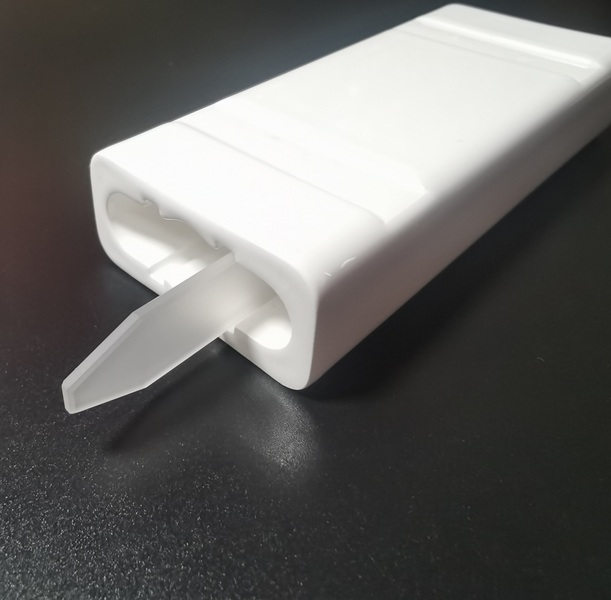
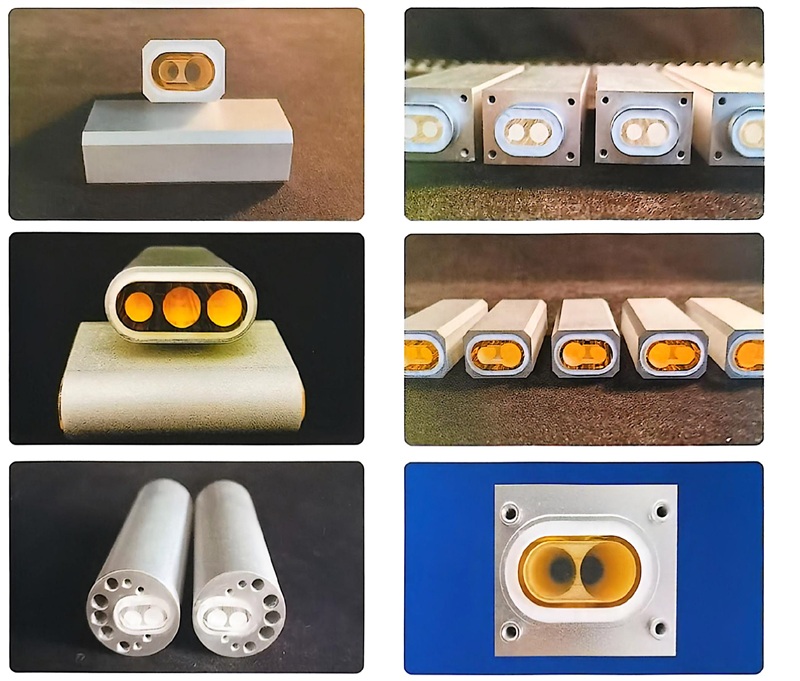
Ceramic materials are primarily made from sintered aluminum oxide, glazed, and other processes.
Advantage: The surface is dense and compact, with excellent chemical inertness and weather resistance. Ceramic reflector can withstand the erosion of commonly used medical disinfectants and the high humidity and temperature fluctuations within the laser cavity. Over long-term use (3-5 years), the reflectivity at the 1064 nm wavelength shows minimal decline, with high consistency in optical performance. Both the strength and service life of the Ceramic reflectorare far superior to that of barium sulfate, meeting the high reliability requirements for long-term continuous operation of medical equipment.
Disadvantage: The raw material and processing costs of ceramic reflector are slightly higher than those of barium sulfate . In the ultraviolet wavelength range, the reflectivity of barium sulfate is superior to that of ceramics reflector.
Ceramic Reflector
Ceramic materials are primarily made from sintered aluminum oxide, glazed, and other processes.
Advantage: The surface is dense and compact, with excellent chemical inertness and weather resistance. Ceramic reflector can withstand the erosion of commonly used medical disinfectants and the high humidity and temperature fluctuations within the laser cavity. Over long-term use (3-5 years), the reflectivity at the 1064 nm wavelength shows minimal decline, with high consistency in optical performance. Both the strength and service life of the Ceramic reflectorare far superior to that of barium sulfate, meeting the high reliability requirements for long-term continuous operation of medical equipment.
Disadvantage: The raw material and processing costs of ceramic reflector are slightly higher than those of barium sulfate . In the ultraviolet wavelength range, the reflectivity of barium sulfate is superior to that of ceramics reflector.
Cooling Efficiency
Barium Sulfate
Barium sulfate is a low thermal conductivity material (thermal conductivity ≈ 0.1-0.3 W/(m·K)), and it has poor thermal conductivity in the bonding layer with the substrate. Under the operating conditions of a high peak power Q-switched laser, the heat generated by light absorption and cavity radiation is difficult to conduct and dissipate quickly, leading to localized thermal accumulation on the mirror's surface, which may cause thermal deformation and further reduce reflectivity and laser beam quality.
Ceramic Reflector
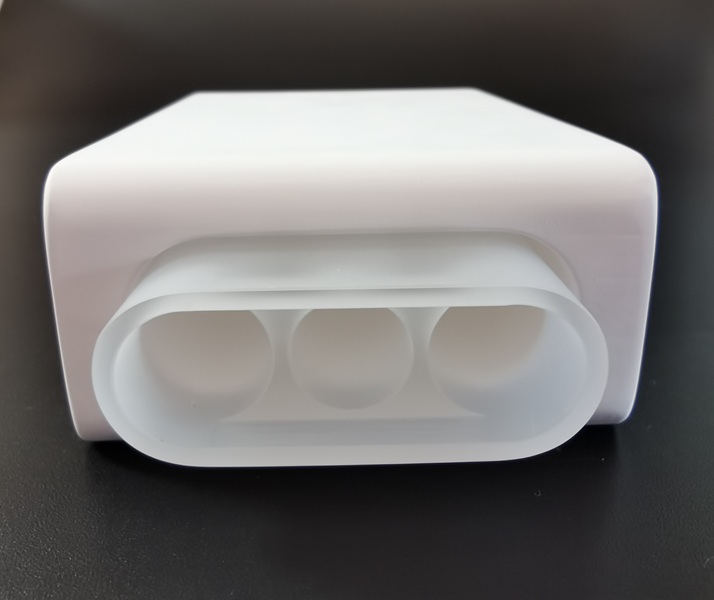
Medical laser-grade ceramic reflector (such as high-purity aluminum oxide ceramics) have high thermal conductivity (thermal conductivity ≈ 20-30 W/(m·K)). Their close bonding with metal heat dissipation substrates enables rapid heat conduction and dissipation. Even under high-frequency, high-peak power operating conditions of Q-switched Nd:YAG lasers, it effectively avoids surface thermal accumulation, maintains the flatness of the mirror, and stabilizes the laser resonator, reducing the risk of damage to optical components due to overheating.
Adaptability: The compatibility with medical laser equipment's water-cooling and air-cooling systems is high, and compared to barium sulfate , ceramic reflector can enhance the overall cooling efficiency of the laser resonator by over 80%.